
Publishing a dataset on the Hugging Face Hub is a fast way to build visibility for a solo developer or small team, but the license field on the dataset card is often filled in without a clear understanding of what it actually grants. This article walks through the practical choices a first-time dataset author faces: which Creative Commons or Open Data Commons license to attach, what rights the publisher actually holds over the data, and how to give attribution that survives downstream reuse. The guidance assumes a creator in or serving the EU, where database rights sit alongside copyright, but the same reasoning applies globally because the dataset card metadata travels with the artifact. The goal is a defensible, well-attributed release that ages well as forks and derivatives accumulate.
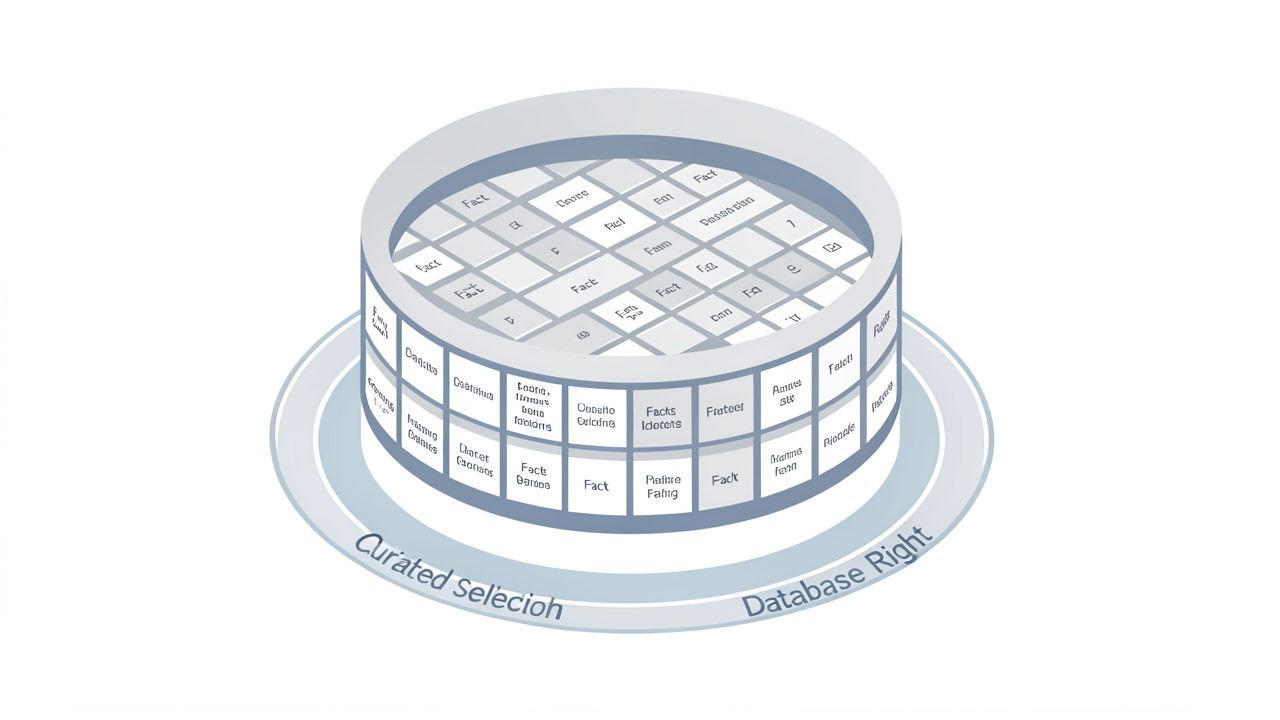
A self-published dataset is governed by two distinct rights regimes, and a clear license decision requires naming both.
The first regime is copyright, which protects original creative expression. For a dataset author, this typically covers the creative choices made when assembling the artifact: the selection of which examples to include, the wording of prompts or instructions, the structure of categories, and any commentary written into the dataset card. Under the Berne Convention, copyright arises automatically without registration, so a publisher in any jurisdiction holds this layer by default.
The second regime is the EU sui generis database right, created by Directive 96/9/EC (the Database Directive). This right protects the substantial investment—qualitative or quantitative—in the obtaining, verifying, or presenting of the contents of a database. Crucially, it applies even when the underlying individual facts are not themselves copyrightable. A publisher therefore may hold a database right over a corpus of factual records solely because of the curation effort required to assemble, clean, and document it.
The jurisdictional asymmetry is significant. The United States has no general equivalent, relying instead on thin copyright over selection-and-arrangement, trade secret law, and contract. The EU, however, grants a 15-year renewable right that can prevent unauthorized extraction or reutilization of the whole database or a substantial part of it. A license that waives copyright alone does not address this separate EU right, leaving a European audience with restricted reuse even after a permissive Creative Commons notice.
A useful illustration comes from the Open Data Institute's reusers guide: a "best 100 cars" database. The publisher owns the curated selection and any original descriptions written about each car, but the underlying facts—manufacturer, horsepower, top speed—are not protectable. However, because substantial work went into obtaining those facts and presenting them in a consistent schema, the database as a whole qualifies for EU database-right protection. If a third party re-scrapes the same facts from public sources and restructures them independently, the publisher's database right may not reach that competitor, but it does restrict direct re-extraction from the publisher's file.
This distinction matters when choosing a license term. Creative Commons 4.0 licenses and every Open Data Commons license explicitly address database rights alongside copyright, precisely because for many datasets the database right is the more relevant protection to waive or license. A CC0 dedication, for example, states that it applies "to the extent possible" to any sui generis database rights, while CC BY 4.0 grants reuse permission covering those rights as well. Authors who only write "© [year] [name]" and stop there may inadvertently leave the database right unaddressed, which weakens the reusability of the release for European downstream users.
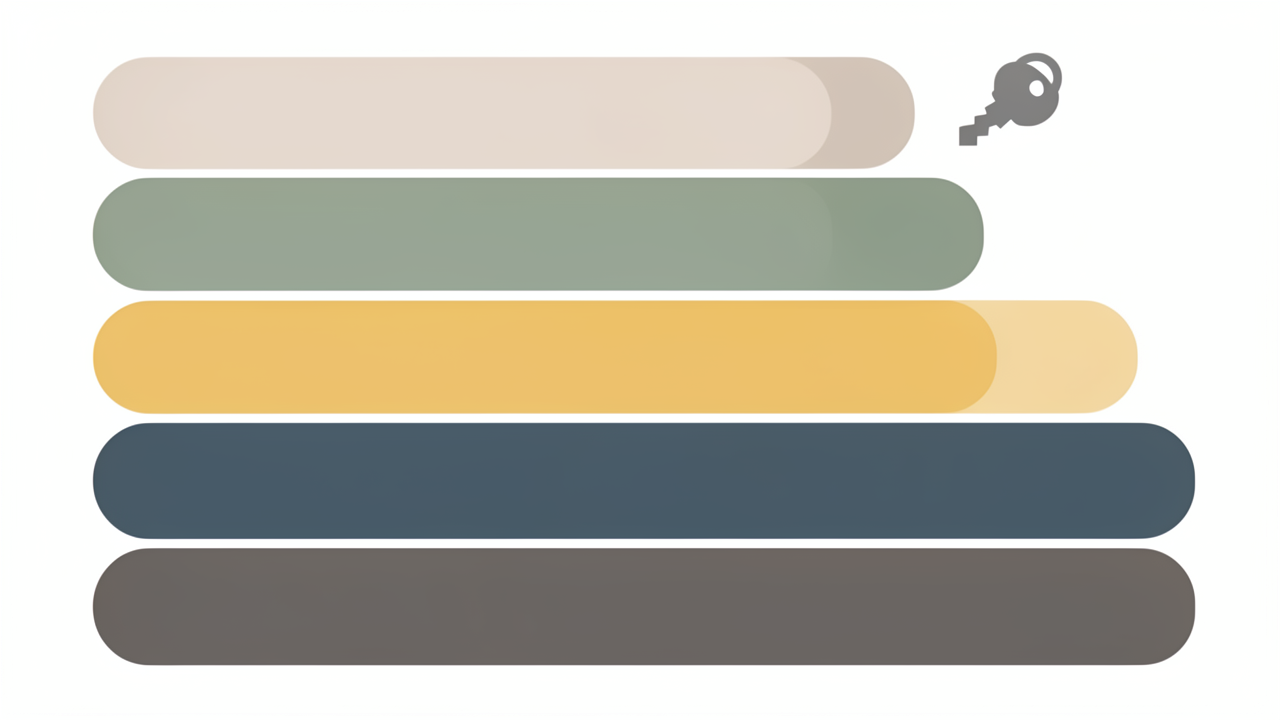
Creative Commons (CC) licenses form a layered set of conditions built on a shared baseline: attribution. Each additional clause narrows what downstream users may do with the work, and the resulting combination is permanent because CC licenses, once applied, cannot be revoked.
CC0 (CC Zero) is not a license in the strict sense but a dedication that places a work as close to the public domain as any copyright law allows. A publisher using CC0 waives copyright interests where possible and, where waiver is not legally feasible, grants a broad permissive fallback license. For a dataset, CC0 means anyone may copy, redistribute, transform, and build upon the data for any purpose, commercial or otherwise, without asking permission. The trade-off is that downstream users are not legally required to credit you, though they often will as a matter of community practice.
CC BY keeps the work open for any purpose, including commercial reuse, and adds a single condition: downstream users must give appropriate credit, link to the license, and indicate any changes made. Attribution is the lightest enforceable requirement CC offers, and CC BY is the most permissive of the named licenses. For a solo developer or small team that wants visibility while maximizing the surface area for reuse, CC BY is often the default rational choice.
CC BY-SA adds a ShareAlike condition on top of attribution. Adaptations and larger works that incorporate the dataset must be released under the same CC BY-SA terms or compatible terms. ShareAlike protects the openness of the original by ensuring derivatives remain open, but it can reduce interoperability: downstream users who want to combine the data with a differently licensed corpus may find the copyleft-style obligation incompatible with their stack or product.
Two optional clauses restrict reuse along different axes:
The clauses can be combined, yielding CC BY-NC, CC BY-ND, CC BY-NC-SA, and CC BY-NC-ND. Each additional restriction narrows the circle of permitted downstream activity.
A practical caveat deserves emphasis: CC licenses were designed primarily for creative works such as text, images, and music, not specifically for data or for collections that attract database rights (such as the EU sui generis right). A CC license covers copyright where it exists and, in its 4.0 version, explicitly clarifies the relationship with database rights, but it does not by itself guarantee clean reuse in every jurisdiction. The GrainDB data licensing guidance flags this gap, noting that creators should think of CC as a well-understood signaling tool rather than a complete legal instrument for data.
Because CC licenses cannot be revoked once issued, the initial choice on the dataset card effectively binds every downstream fork and derivative. Switching later requires a new release under a different license, which fragments the ecosystem around the original.
The Open Science Lab decision tree distills the choice into three questions:
Answering those three questions in order produces a defensible license selection without needing to parse the full legal text. For a first-time dataset author, that three-question filter is usually enough to land on a CC choice that ages well.
Open Data Commons (ODC) licenses exist because Creative Commons (CC) licenses do not formally address sui generis database rights. In jurisdictions such as the EU, where the Database Directive creates a separate right in the selection or arrangement of a database independent of any copyright in the underlying content, a CC license on its own can leave that database right unaddressed. ODC licenses were drafted to cover exactly that gap.
Three ODC licenses cover most realistic cases:
The EUI library guide on research data licensing recommends CC0 1.0 Universal for maximum reuse of research data, and that recommendation carries over to ODC-PDDL for databases where the EU Database Directive applies. The tradeoff is straightforward: waiving all rights maximises downstream adoption but forfeits the ability to require attribution.
For projects that specifically target EU database law, or that need a database-aware share-alike clause, ODbL is the appropriate choice. OpenStreetMap is the canonical example of ODbL in production, where every fork or extract must remain under ODbL.
A practical friction point deserves attention. Platforms such as DataDock and similar dataset registries require verification that the source-data license is compatible with the chosen output license before a derived dataset can be republished. A concrete example: if upstream data is released under CC BY-SA, the share-alike clause propagates to any derivative, so a downstream publisher cannot legitimately relicense that derivative as CC0 or PDDL. Attempting to do so creates a license conflict that surfaces during review and can result in the dataset card being rejected or corrected after publication. The same logic applies to ODbL: a derivative of ODbL data must remain under ODbL, not under a permissive PDDL or CC BY license.
The decision matrix therefore reduces to a few questions:
For most solo developers releasing structured data for broad reuse, CC0 or ODC-PDDL remains the lowest-friction choice. For datasets where the curation itself is a contribution worth protecting through attribution or share-alike, ODC-BY and ODbL provide the database-specific legal frame that Creative Commons does not.
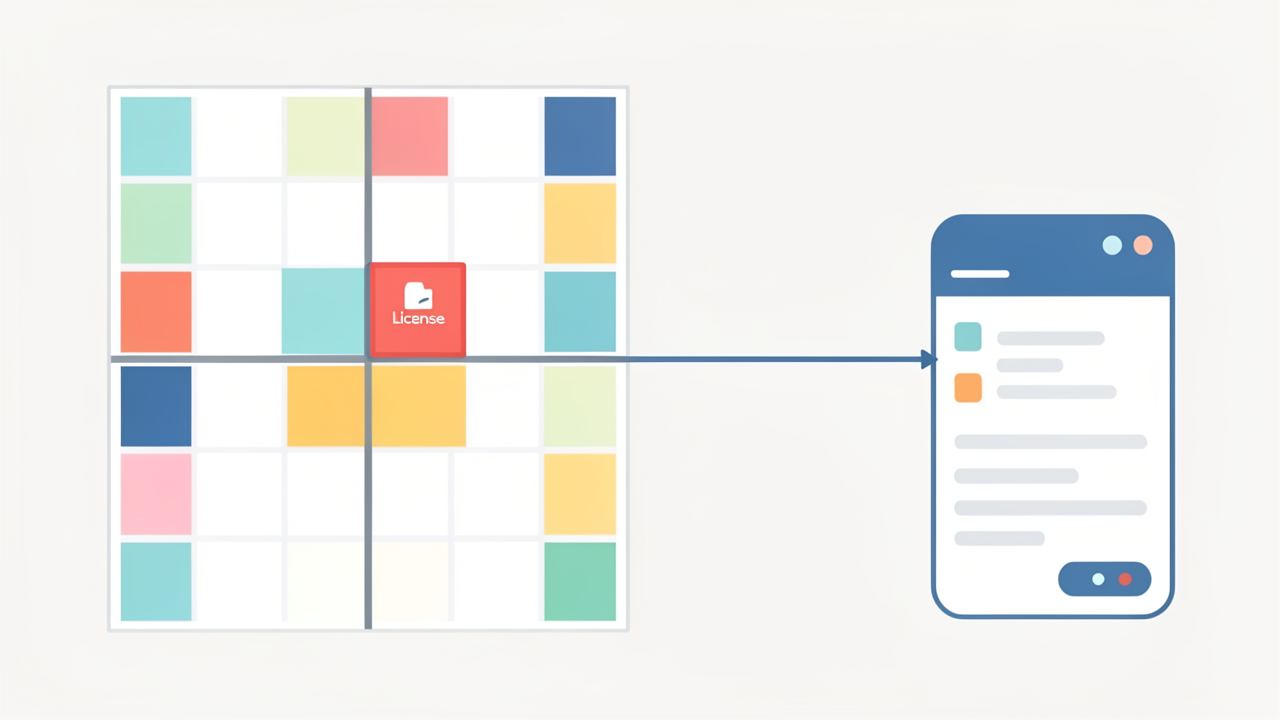
The License field on a Hugging Face dataset card is the single most consequential piece of metadata for a first release. It drives the filter sidebar in the Hub search UI, it conditions how downstream users can lawfully reuse the data, and it is effectively immutable once the dataset has been cloned. The decision procedure below maps four common author scenarios to the license options exposed by the dataset card template.
The chosen identifier is entered verbatim in the License field of the dataset card metadata UI, where it is rendered as a tag and exposed to the Hub search filters. Common recognized strings include cc-by-4.0, cc-by-sa-4.0, cc-by-nc-4.0, cc0-1.0, odc-by-1.0, odbl-1.0, and pddl-1.0. If the standard dropdown does not list your license, Hugging Face permits a custom string, but custom values are not recognized by the search filters, which reduces discoverability.
A license grant, once offered and accepted by a downloader, persists for that copy of the data. Relicensing the repository therefore does not retract rights already conferred on prior clones or forks. Treat the License field as a one-way decision: changing it later confuses downstream users and may create inconsistent obligations between old and new copies.
Whatever license you select, restate it in the narrative sections of the dataset card together with provenance, known limitations, and ethical considerations. The legal metadata and the prose should agree, because the card body is often the only context a reuser reads before incorporating the data into a pipeline.
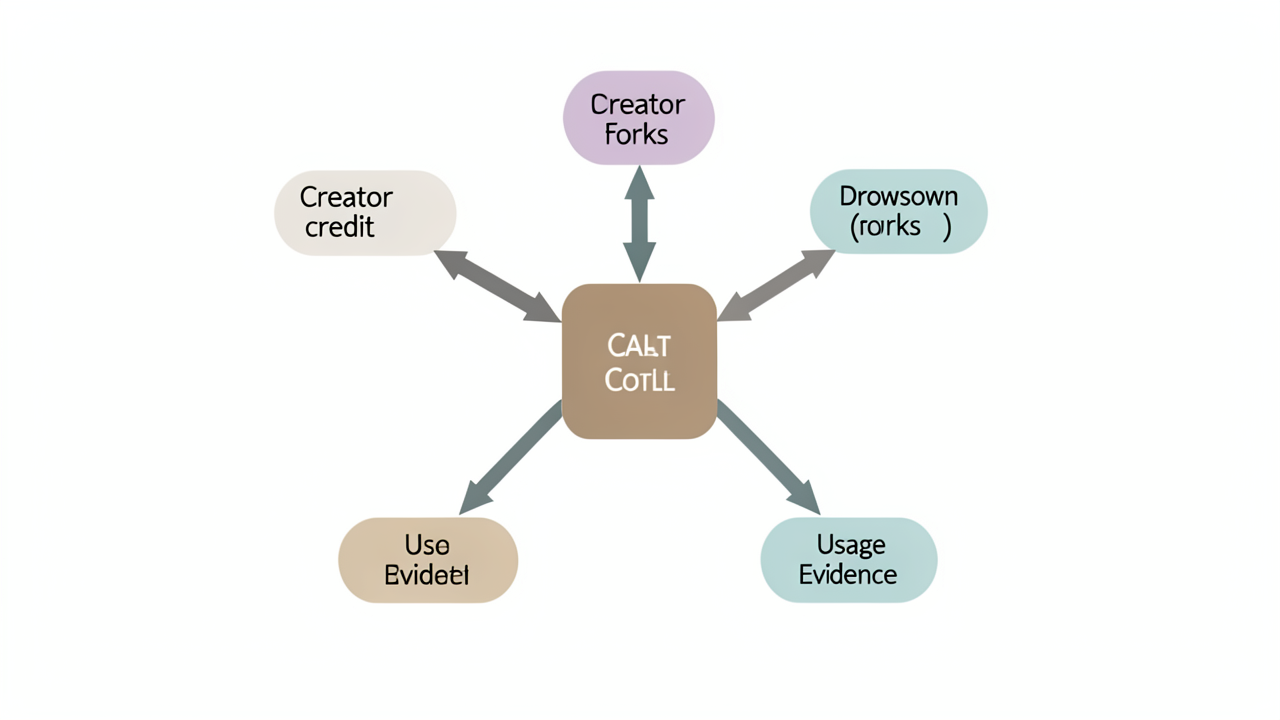
Attribution obligations in open-data licenses are often treated as a narrow legal checkbox, but in practice they serve four overlapping social purposes that matter to a first-time publisher on the Hub.
The two are related but distinct:
For a first release on the Hub, both should appear in two places: the human-readable README, and the structured citation field of the dataset card YAML. The Hub renders the citation field as a "How to cite" block and exposes it through the API, which means automated pipelines can pick it up without scraping prose.
Academic publishing has well-established citation norms enforced by journals and review committees. Open data has no equivalent gatekeeper, so reuse often happens without any credit at all. A publisher can compensate for that gap with a short, explicit attribution statement in the README. A useful template covers four points:
Keeping the attribution statement short, machine-readable where possible, and distinct from the citation block helps it survive the long tail of forks, mirrors, and partial derivatives that an open dataset accumulates over time.
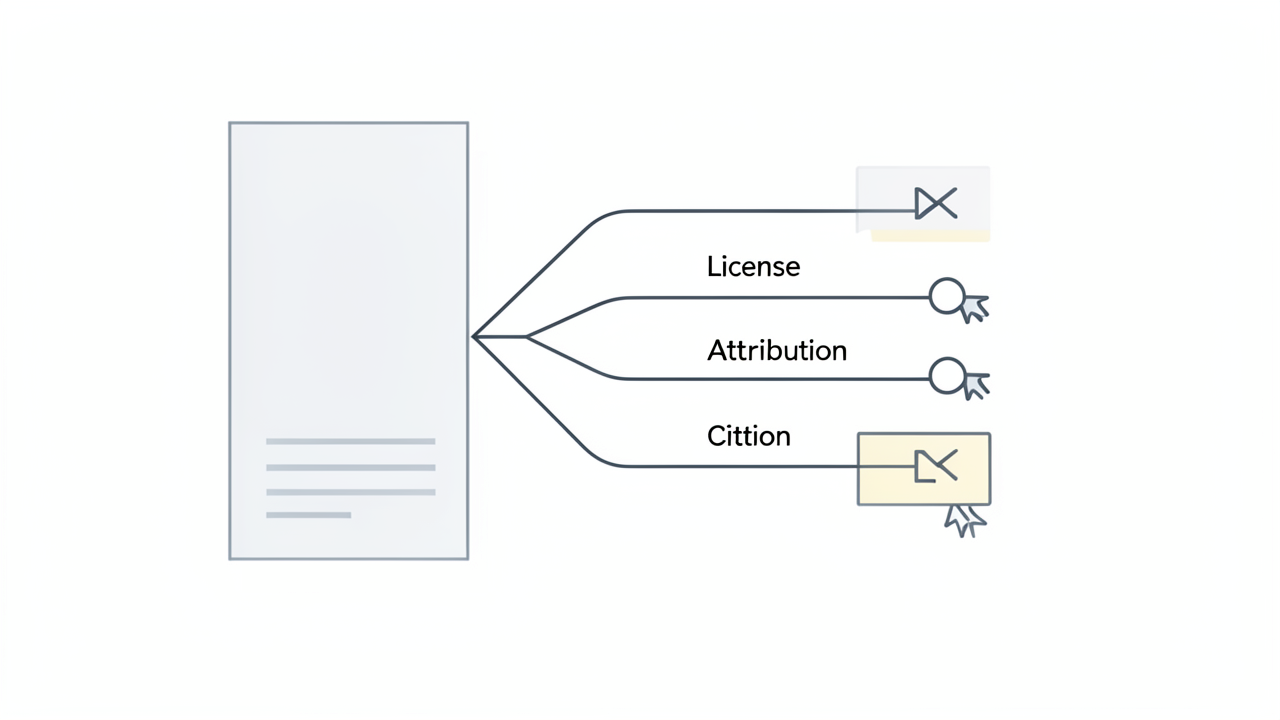
A reusable attribution statement balances human readability with the machine-parseable metadata that Hugging Face stores on a dataset card. The Open Data Commons attribution template is a compact starting point:
Contains information from
<DATABASE NAME>which is made available under the ODC Attribution License (ODC-By).
On a Hugging Face dataset card, this becomes a short block that combines:
homepage field, or the repo URL if no external page exists).Standard open data and Creative Commons licenses are not viral in the way copyleft software licenses are. CC BY, CC0, ODC-BY, and ODbL all permit derivative databases without requiring those derivatives to adopt the same license, and none of them automatically bind downstream redistributors to the original author's attribution chain.
A few licenses do impose attribution persistence. The Ordnance Survey Open Data Licence, for example, requires that attribution be carried with any redistribution. As a first-release team, you can mimic this behavior in your dataset card by adding an explicit request, phrased as a publisher wish rather than a legal condition, that any redistribution retain the attribution block. A typical line reads:
If you redistribute this dataset or a derivative, please retain the attribution statement above and the link to the original Hugging Face repository.
This is best described in the dataset card as an "attribution request," separate from the legal license field, so that it is clearly social rather than contractual.
Each downstream consumer inherits a growing chain of credits: the original source, the Hugging Face release, the fork, and possibly the model that was fine-tuned on it. To keep the chain manageable:
citation field) so evaluation harnesses and model card generators can ingest it without retyping.Conventions for a clean release:
Citation block in BibTeX or APA form for academic reuse.description metadata so it survives even when the README is rendered as plain text.When license, attribution, and citation all live in one document, the dataset card becomes the single authoritative contract for the release, and every fork and derivative can point back to it without ambiguity.