

GLM-5.3-Flash carries two headline architectural changes: a hybrid sparse-plus-linear attention stack, and a residual-stream redesign called Manifold-Constrained Hyper-Connections (mHC). The second innovation receives far less coverage, yet it touches every layer junction in the model and underpins Z.ai's claim that the 320B-parameter MoE trains more efficiently at depth. This article examines mHC as adopted in the GLM-5.3-Flash lineage: how the residual stream is widened into parallel lanes, how learned matrices mix those lanes at every junction, and why the mixing is confined to the Birkhoff polytope of doubly stochastic matrices. It separates established mechanics from vendor positioning and flags which specifics are confirmed for GLM-5.3-Flash versus inherited from DeepSeek's earlier publication of the same technique. The intended audience is researchers and inference engineers who already understand standard residual connections and want a precise model of what changed. Attention design, serving memory, and benchmark comparisons are covered in companion articles and deliberately set aside here.
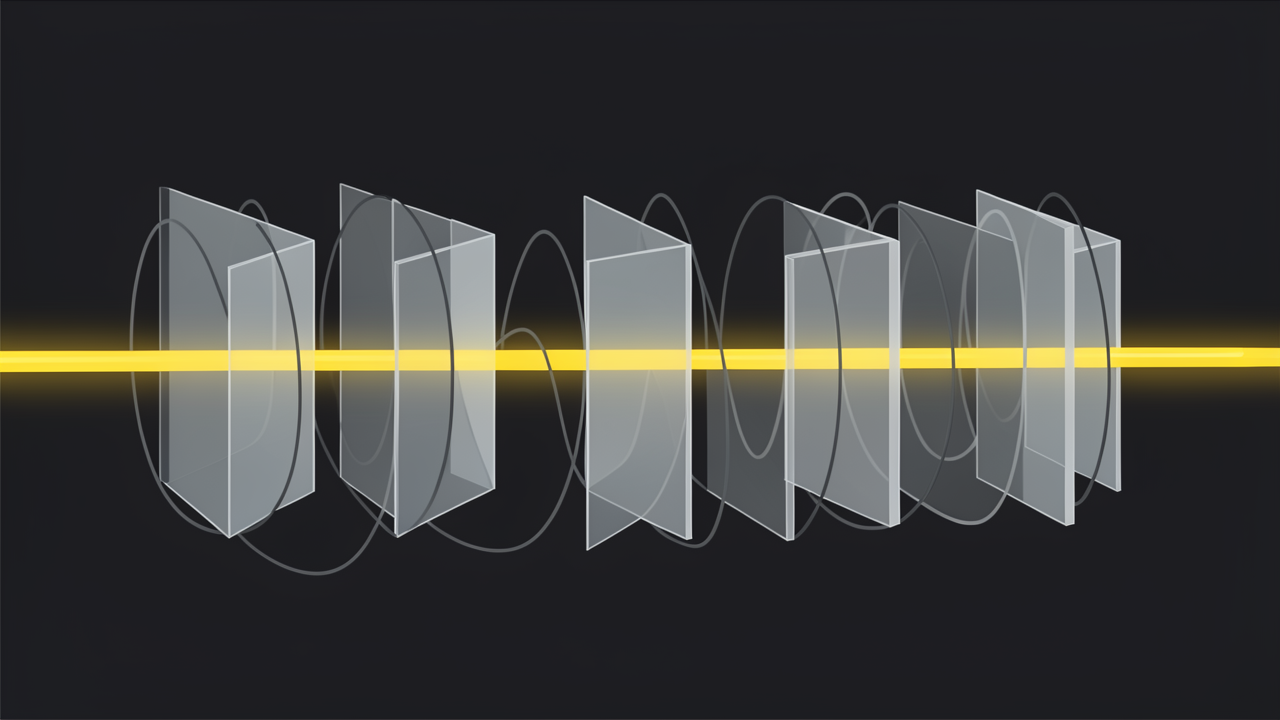
In a standard transformer block, each sublayer — attention or feed-forward — produces one output tensor, and the residual connection returns that tensor back into the stream by simple vector addition. Written formally, the junction at depth l computes
x_{l+1} = x_l + F_l(x_l)
where F_l is whichever sublayer sits at that junction. The skip is an identity: it adds the layer's contribution to whatever was already there and passes the sum forward unmodified. There are no learned weights, no learned mixing, and no choice of which signals to carry — every unit of x_l flows through every junction unchanged.
This identity skip is what gives transformers their "gradient highway." During backpropagation, gradients can travel from the loss all the way back to early layers along the additive path without being distorted by the surrounding sublayers' weights, which is one reason very deep transformers remain trainable at all. The residual stream — the running sum of these additions across layers — is also the conventional lens for interpreting model behavior, treating each layer as a small edit applied to a persistent representation that every downstream layer can read.
The same identity skip is reused identically at every junction in the network. Standard architectures vary the sublayer F_l from layer to layer, but the glue between sublayers never varies: same lane width, same additive rule, same single stream of activations.
Z.ai's official GLM-5.3-Flash model card lists two distinguishing architectural innovations: hybrid sparse-plus-linear attention, and Manifold-Constrained Hyper-Connections (mHC), framed as a way to "further improve scaling efficiency during training." Coverage of the release describes the underlying hyper-connections as a generalization of the residual connection that lets signal and gradient flow through deep networks, with the manifold-constrained variant designed to keep that flow well-behaved as the model scales ([MindStudio](https://www.mindstudio.ai/blog/glm-5-3-flash-open-weight model), marktechpost).
Crucially, mHC was not retrofitted onto GLM-5.2. The 320B-parameter, 18B-active MoE was built on a newly trained base model, with mHC baked into the 30-trillion-token multimodal pretraining run as a from-scratch design decision (Kie.ai, Together.ai). That ordering matters: the residual redesign had to work for the full pretraining objective, not just adapt to a converged post-norm or pre-norm stream.
The rest of this article assumes that baseline and stays narrow to it. Attention internals (the KDA/MLA/IndexPool stack), serving-memory budgets, and end-to-end benchmarks are intentionally deferred to companion pieces; here, the residual stream is the only moving part.
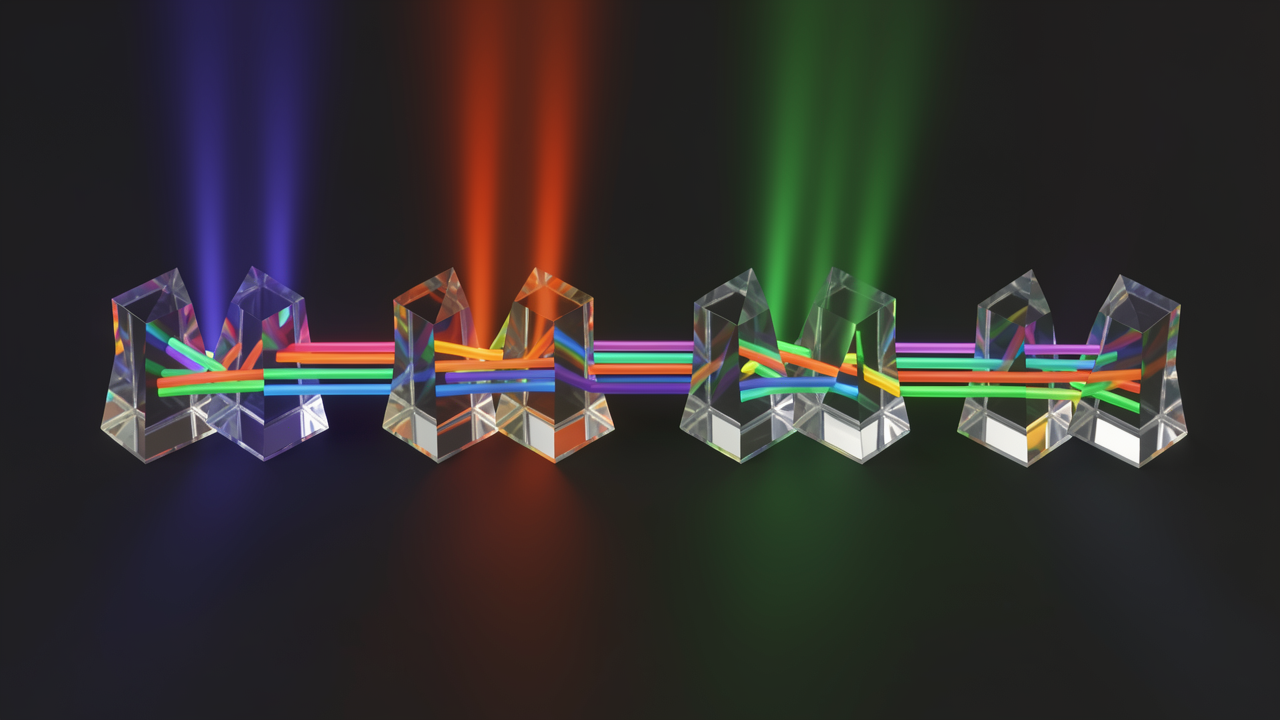
In mHC, the single residual vector that standard transformers carry between layers is replaced by a stack of parallel residual lanes. Each layer-to-layer update is expressed as:
X_{l+1} = B_l X_l + C_l F_l(A_l X_l)
where F_l is the unchanged sublayer (an attention block or, in the MoE blocks, an expert FFN) and A, B, C are three learned operators applied at every junction.
Each junction learns its own coefficients for A, B, and C. Per-layer coefficients mean the network decides, block by block, how to combine streams going into the sublayer, how to blend the previous lanes with one another, and how to allocate newly computed information afterward. The residual pathway becomes a state-shaped pathway the model controls, rather than a fixed skip.
Z.ai's model card confirms that GLM-5.3-Flash adopts mHC but does not publish the formulation or its hyper-parameters (NVIDIA NGC catalog, MindStudio). A third-party comparison with DeepSeek V4-Flash reports that Flash widens the residual pathway into four parallel lanes — the same setting DeepSeek V4 popularized — but this lane count remains a secondary-source figure that should be verified against the released checkpoint configuration rather than the published card.
A related variant, DeepSeek V4.1-Flash, derives its pre-, post-, and combine coefficients from the contents of the lanes themselves rather than from learned per-junction tables (The Software Frontier). Z.ai's implementation should not be assumed to match this content-dependent variant; the released GLM material is silent on the coefficient-generation strategy.
For GLM-5.3-Flash, the operators sit at every block of a 45-layer stack with hidden size 4,096, at both the attention and expert-FFN boundaries. The expert side of those sublayers is 288 routed experts with 8 active plus 1 shared expert per token, so each mHC junction lands on a boundary where routing decisions and lane mixing interact directly.

Each junction in an mHC stack applies a learned lane-mixing matrix B_l to the parallel residual lanes. With n_hc lanes and L layers, the residual pathway through the network is the iterated product
$$X_L = \left(\prod_{l=1}^{J} B_l\right) X_0 ; + ; \text{(per-layer terms)}$$
where J is the number of junctions. The composition is what matters, not any single B_l in isolation: the contribution of the original residual vector X_0 to the final activation is a product of J learned matrices. If the spectral norm ‖B_l‖₂ drifts above one anywhere in the stack, the product of norms grows without bound and activations explode; if it drifts below one, the residual contribution decays toward zero and the network loses its shortcut. Stability depends on every factor staying close to one simultaneously, which is a property the optimizer has no structural reason to find — it must be learned and held for the lifetime of training.
The DeepSeek V4-Flash lineage illustrates the depth at which this becomes acute. According to published coverage of mHC, DeepSeek V4-Flash spans 86 junctions across its backbone, which means a forward pass composes 86 learned mixing matrices along the residual path with no built-in guarantee of norm preservation (The Software Frontier). The 86-junction count is DeepSeek-specific: GLM-5.3-Flash ships a 45-layer backbone (CometAPI comparison), and Z.ai has not published the junction count or n_hc value for GLM-5.3-Flash in retrievable sources. With 45 layers, the residual path is materially shorter than V4-Flash's, but still deep enough that an unconstrained product of dozens of learned mixers is the regime being optimized against.
Without a constraint, holding ‖Π B_l‖₂ ≈ 1 is an empirical target that has to be re-attained for every training run — every learning-rate schedule, every data mixture, every batch-size choice perturbs the mixers' learned scale. A badly scaled B_l near the input compounds across everything downstream, so a single early-layer pathology can corrupt the entire residual signal long before the optimizer gets a chance to correct it. The natural mitigations — gradient clipping, tighter initialization, smaller learning rates — all trade against throughput.
DeepSeek's own framing positions mHC as its answer to exactly this failure mode at trillion-parameter MoE depth: a way to keep training losses well-behaved without leaning on aggressive gradient clipping (WhatLLM). Z.ai's adoption of the technique in GLM-5.3-Flash inherits that framing for cross-lab context, but no GLM-5.3-Flash-specific stability claim has been published and the technique's behavior at the model's 45-layer depth is not separately verified in the retrieved material.

Concretely, the constraint says that each lane-mixing matrix B at a junction must be doubly stochastic: every entry is nonnegative, every row sums to one, and every column sums to one. The set of all such matrices is the Birkhoff polytope — a convex, low-dimensional subset of the full matrix space. In DeepSeek's V4.1-Flash serving recipe, B is projected onto this set at every step using roughly 20 Sinkhorn iterations, alternating row and column normalizations until both sum conditions hold; that same projection is what GLM-5.3-Flash inherits under the mHC label. The set's name is the eponym for the "manifold" in Manifold-Constrained Hyper-Connections: the learnable mixers live on this geometric object rather than the unconstrained matrix space around it.
Two properties of doubly stochastic matrices make this choice load-bearing rather than cosmetic.
This is what separates mHC from mitigation-style fixes. Normalization, gradient clipping, post-hoc spectral penalties, and µ-parameterization-style rescalings all correct drift after it appears: the network is allowed to wander into an unsafe regime and is then pulled back. The polytope constraint prevents the unsafe region from being reachable in the first place, because optimization can only sample matrices that already satisfy the bound.
What the public technical sources do not claim is equally important. The Birkhoff argument supports the per-mixer non-expansion property and, by closure, the non-expansion of the full residual product. It does not, on its own, supply a specific bound on end-to-end gradient norms through the MoE routing, the attention blocks, or the combined stack, and reports on mHC deployments avoid stating one. The guarantee is structural about the mixer algebra; wider claims about gradient behavior require separate analysis that the sources flag as out of scope.
For GLM-5.3-Flash specifically, Z.ai's model card credits DeepSeek for the technique, so the Birkhoff construction should be read as inherited from DeepSeek's earlier publication rather than re-derived for this checkpoint. (The Software Frontier, vLLM Recipes)

At every junction the model emits an unconstrained mixing matrix by reading the current lane state and producing a square n_hc × n_hc parameter set. To keep that matrix on the Birkhoff polytope — the set of nonnegative matrices whose rows and columns each sum to one — the implementation then applies Sinkhorn normalization: alternating row rescaling and column rescaling until the matrix is doubly stochastic within tolerance. The intermediate mixes remain strictly positive, so a fixed number of iterations converges to a point on the polytope whose deviation from the true intersection scales like 1 / n_iter rather than with the input magnitude.
The one explicit published number comes from the DeepSeek line. The DeepSeek-V4.1-Flash vLLM serving guide documents that the combine matrix is "made doubly stochastic by 20 Sinkhorn iterations." That value is specific to that model's recipe and should not be transferred silently to other checkpoints. For GLM-5.3-Flash the retrieved sources do not state the iteration count, nor whether projection is implemented as a fixed-K loop, a learned stopping criterion, or a softer softplus-plus-normalize variant. Anyone reproducing or serving GLM-5.3-Flash's mHC behavior has to recover the recipe from the released weights or config and should not assume parity with DeepSeek's 20.
With a lane count around four, the combine matrix at each junction is roughly 4 × 4, and the Sinkhorn loop touches that matrix plus a few length-4 vectors per token. Compared to the 4,096-dimensional hidden states and the MoE routing tables in GLM-5.3-Flash, this arithmetic is negligible. This is an inference drawn from the documented lane width and hidden dimensionality, not a vendor-published throughput measurement; the actual engineering savings in this lineage instead come from how the mixing interacts with kernel fusion — notably the Single-Pass mHC "Mega-mHC" kernel in DeepSeek-V4.1-Flash that cuts activation memory traffic by half — rather than from the projection arithmetic itself.
Placement matters more than per-iteration cost. In the DeepSeek line, merged multimodal embeddings are fed into the text model as inputs_embeds before the stream expansion, while raw token ids still flow through the router so image routing bias can apply. Any port of mHC into GLM-5.3-Flash therefore has to decide explicitly where lanes instantiate: before or after multimodal fusion, at every encoder boundary, or only inside decoder blocks. Getting that boundary wrong silently changes which signals travel as parallel streams and which enter through a collapsed single vector.

Glm-5.3-Flash's confirmed configuration sets the context in which mHC has to operate. The model has 45 layers (a 3-layer dense MLP stem followed by 42 MoE layers), a hidden size of 4,096, a 154,880-entry vocabulary spanning text, image, and video tokens, 320B total parameters with 18B active per token, and a 1,048,576-token max_position_embeddings (local-ai-zone.github.io). Crucially, the model card and release coverage treat Glm-5.3-Flash as a from-scratch base trained on a 30-trillion-token multimodal corpus, not a fine-tune of Glm-5.2; Glm-5.3 itself reused the previous base and only scaled post-training (eigent.ai, marktechpost.com).
The from-scratch base matters for the mHC story. There is no inherited checkpoint absorbing early-training instability, so the Birkhoff-polytope-constrained residual mapping has to be numerically stable from step one — across every one of the 45 layer junctions. Secondary coverage positions mHC specifically as a stabilizer for that 45-layer depth (cometapi.com). Z.ai's framing in the model card emphasizes training-side scaling efficiency — "more capability per parameter and per training step" rather than further plateaus — while some secondary coverage extends the claim to inference efficiency (mindstudio.ai). Treat the inference-side extension as unverified: the official card anchors the claim to training.
The 45-layer figure is itself part of the mHC narrative. Glm-5.3-Flash's depth is about 58% of Glm-5.3 and Glm-5.2 (both 78 layers) and roughly half of Glm-4.5's 92 layers, while still hitting the same total-parameter tier (together.ai, marktechpost.com). Fewer junctions per parameter is part of why a constrained residual design is plausible here at all.
An honesty note is essential: no retrieved source isolates mHC's contribution to Glm-5.3-Flash's benchmark results via ablation. Any gains must be attributed to the joint design — mHC plus the hybrid (34× KDA linear + 11× NoPE sparse MLA) attention stack plus Stable LatentMoE plus the new base and 30T-token corpus — not to mHC alone (local-ai-zone.github.io, cometapi.com).
The strongest cross-lab support for the underlying mechanism comes from DeepSeek's reporting on its own use of mHC at trillion-parameter MoE depth: training losses stayed well-behaved without aggressive gradient clipping, and the Birkhoff constraint provides structural rather than empirical stability (whatllm.org, thesoftwarefrontier.com). That is supporting evidence for why mHC could work in Glm-5.3-Flash, not proof of Glm's specific numbers.
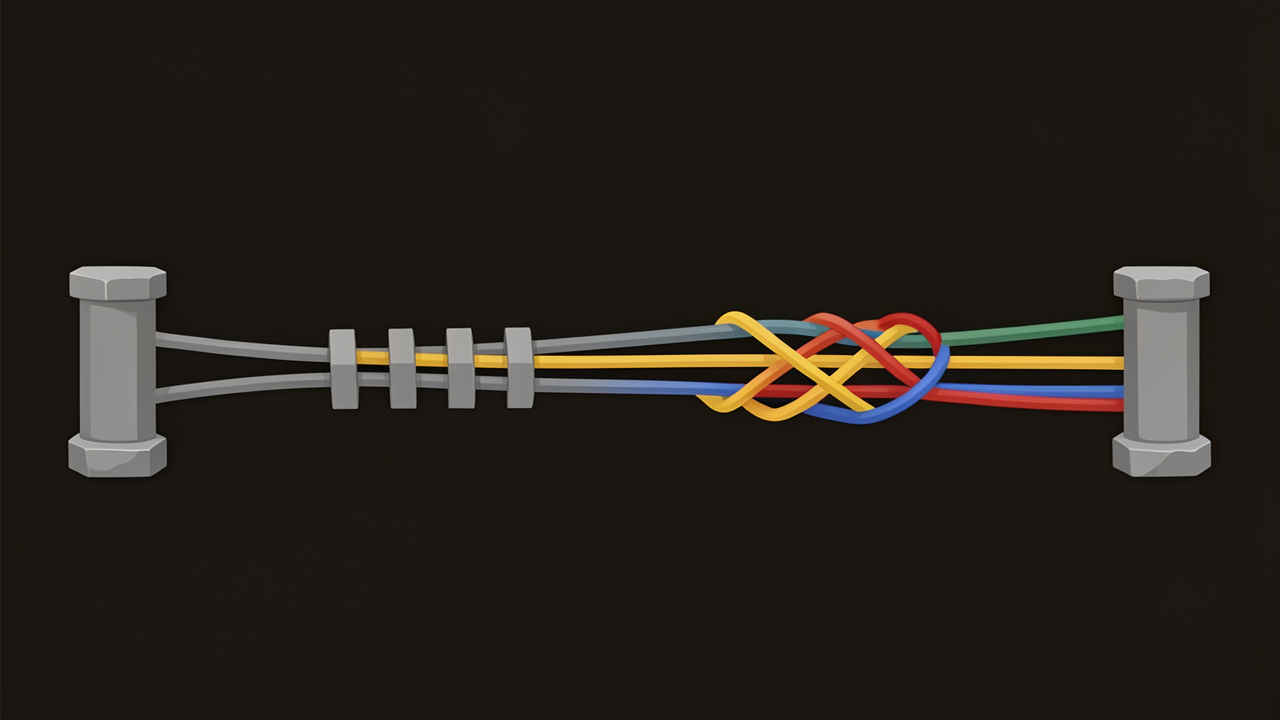
The standard residual block passes one vector through every layer with a fixed identity skip: x_{l+1} = x_l + F_l(x_l). It adds zero parameters, is trivially non-expansive, and is wired into every kernel library and inference backend without thought. mHC replaces that single-lane skip with the update X_{l+1} = B_l X_l + C_l F_l(A_l X_l), where X_l is now a stack of n_hc residual lanes rather than one vector (DeepSeek V4-Flash write-up).
For GLM-5.3-Flash specifically, Z.ai documents the use of mHC as a scaling-efficiency improvement layered onto the base architecture (mindstudio.ai). The four-lane expansion factor (n_hc = 4) is not independently re-stated in GLM-5.3-Flash release material and should be understood as inherited from DeepSeek's earlier publication of the same technique.
The practical delta breaks down across four axes:
Parameters and arithmetic. mHC introduces three small learned projections per layer (A_l contracting the lane stack into the layer input, C_l lifting the output, and B_l mixing lanes) plus a projection step onto the Birkhoff polytope at every junction. Overhead is small per layer but non-zero, and unlike standard residuals it cannot be elided.
Stability guarantee. A learned B_l with spectral norm above 1 would compound across dozens of junctions; below 1, signal would decay. Constraining B_l to the Birkhoff polytope (nonnegative, rows and columns summing to one) forces spectral norm to exactly 1, and the set is closed under multiplication, so the residual mapping is non-expansive by construction rather than by empirical tuning (DeepSeek V4-Flash write-up). Standard residuals get this property for free; mHC has to enforce it.
Expressivity. With independent lanes, the network can preserve information strongly in one lane while transforming another aggressively, effectively letting it shape its own residual pathway rather than inheriting a fixed skip topology (DeepSeek-V4.1-Flash analysis).
Engineering footprint. Inference engines must implement lane expansion and the projection correctly — silent degradation follows from shortcuts. Quantization pipelines now touch mixer parameters that did not exist in classic residual blocks. Fine-tuning code must reproduce the projection step; naïve ports of standard residual blocks will not match the published behavior.
Standard residuals are simpler, battle-tested, and free. mHC trades that simplicity for expressivity plus a structural stability guarantee — a tradeoff that only pays off at the depth and scale GLM-5.3-Flash targets.

Manifold-Constrained Hyper-Connections were first published by DeepSeek's research team in late 2025. Z.ai shipped the technique inside GLM-5.3-Flash on August 26, 2026, which places the publication-to-production gap at roughly eleven months. The retrieved reporting indicates that Z.ai's model card explicitly credits DeepSeek for the technique (flash-tier comparative analysis). This is a clear instance of cross-lab architectural diffusion inside the open-weights ecosystem: the originating lab is named in the adopter's own materials rather than being absorbed silently.
The mechanism itself — widening the residual stream into parallel lanes and constraining the inter-lane mixing matrix to the Birkhoff polytope of doubly stochastic matrices — is the same construction DeepSeek described in its technical reports, with the same stability argument: doubly stochastic matrices have spectral norm exactly one and are closed under multiplication, so a product across many junctions remains non-expansive by construction (thesoftwarefrontier.com).
Caution on the acronym. Third-party write-ups on the DeepSeek line expand mHC inconsistently. In some sources it is rendered as "multi-stream residual connections," in others as "Multi-Head Control," "multi-head compression," or "Mega-History-Compression." These refer to different mechanisms — for example, a single-pass fused kernel variant or a history-compression scheme — and not to the residual-rewiring technique Z.ai ships. Treat secondary-source expansions of the acronym as unreliable and anchor on Z.ai's official "Manifold-Constrained Hyper-Connections" naming when matching descriptions to GLM-5.3-Flash.
Before porting mHC behavior into a downstream implementation, the following steps are prudent rather than verified:
For the mechanism's primary literature, point researchers at DeepSeek's technical reports, which remain the canonical description of mHC. The single most valuable missing artifact would be a Z.ai ablation isolating mHC's contribution in GLM-5.3-Flash; until one is published, downstream claims about the technique's effect on the model's benchmarks should be treated as vendor positioning rather than as measured result.