

Long-running business workflows — order fulfilment, approvals, claims handling — outlive individual requests, deployments, and sometimes the teams that wrote them, which makes the choice of process engine an architectural commitment. Flowable, Camunda, and Activiti are the three best-known Java-based open-source lineages for executing BPMN-style business processes, and each has taken a distinct architectural direction. Flowable emphasizes flexible engine deployment, from embedded in an application to standalone and clustered; Camunda's cloud offering is built on the Zeebe engine for horizontally scalable orchestration; and Activiti Cloud reworks the original Activiti engine into cloud-native building blocks. This article compares the three engines through their deployment models, architectural assumptions, and target use cases. It is written for backend architects and platform engineers evaluating a BPM engine for long-running business workflows, rather than for data-pipeline or CI-level orchestration.

All three engines share a Java‑centric foundation. Flowable’s BPMN, DMN, and CMMN runtimes are written in Java and expose rich Java and REST APIs for direct embedding or service‑oriented use【0†content】. Activiti is likewise documented as a Java‑centric BPM platform with comprehensive Java APIs and BPMN 2.0 compliance【2†content】. Camunda’s classic platform also runs on the JVM, but the current Camunda Cloud service executes BPMN models on the open‑source Zeebe engine, which is accessed through language‑specific clients rather than a traditional embedded library【1†content】.
| Engine | Core runtime | Primary deployment model | License (as of 2024) |
|---|---|---|---|
| Flowable | BPMN / DMN / CMMN engines | Embedded, standalone service, clustered, or cloud‑hosted | Apache 2.0 (permissive)【1†content】 |
| Camunda Cloud | Zeebe workflow engine (BPMN) | Fully managed SaaS; on‑premise Zeebe also available | Zeebe – Apache 2.0; Cloud service – commercial subscription【1†content】 |
| Activiti Cloud | Re‑engineered Activiti core | Containerised, cloud‑native microservices (runtime bundles, query service) | Apache 2.0 (open source)【2†content】 |
When selecting a BPM engine for long‑running business workflows, the most consequential dimensions are:
The naming in the Camunda ecosystem has evolved. The Camunda Cloud brand (2022‑present) refers to the Zeebe‑based SaaS offering, while the camunda-bpm-platform repository still represents the classic embedded engine generation that predates Zeebe. This article keeps the Zeebe‑based line and the older embedded platform distinct, and dates all statements to the 2024‑2025 releases referenced above.

Flowable ships three purpose‑built engines that implement the BPMN, DMN, and CMMN standards for structured processes, decision tables, and unstructured case handling respectively [1]. All engines are written in Java and distributed under the permissive Apache 2.0 license [5], which allows unrestricted commercial use and modification.
Flowable can be run in four distinct modes, giving teams a clear migration path:
| Mode | Typical use‑case |
|---|---|
| Embedded – the engine libraries are packaged inside a Java application and accessed through the native Java API [2]. | |
| Standalone service – a dedicated server hosts the engine and exposes a REST API, making the workflow service language‑agnostic [4]. | |
| Clustered – multiple nodes share a common database, providing horizontal scalability and high availability for long‑running processes [1]. | |
| Cloud – the same engines can be deployed on IaaS or PaaS platforms, either as independent services or as part of Spring‑Boot‑based containers [1]. |
The Java API enables direct embedding and programmatic control for developers, while the REST API lets any platform interact over HTTP, supporting both human‑task orchestration and automated micro‑service integration [4].
If a project already runs on a single‑JVM Spring stack, Flowable’s native Spring integration [6] lets teams embed the engine immediately. Should the need arise for a shared workflow service or a clustered production environment, the same engine binaries can be promoted without code changes, preserving operational consistency.
Flowable’s vendor‑reported metrics indicate a “committed community” with more than 5 000 ★ on GitHub [7]. While these figures are self‑reported, they suggest a sizable pool of contributors and users that can help with troubleshooting, extensions, and knowledge sharing.

Camunda Cloud is a commercial workflow‑as‑a‑service that runs BPMN processes on the open‑source Zeebe engine. The service adds managed hosting, enterprise‑grade features (e.g., clustering, multi‑region failover, observability) and a set of tooling for process modeling, deployment, and human‑task handling【0†source】.
Unlike traditional embedded BPM engines, Camunda Cloud follows a remote‑by‑design model. Application code never embeds a process engine; instead it uses language‑specific client libraries to send commands and events to a centrally hosted Zeebe broker cluster. Workers—implemented in any supported language—subscribe to job topics and pull work units from the broker, allowing independent scaling of the worker fleet. This decouples the orchestration layer from the business services and matches the expectations of micro‑service architectures where each service can be scaled independently.
The platform supports BPMN 2.0 for process definition, DMN for decision automation, and built‑in human‑task management for workflows that require user interaction【2†source】. Its design emphasises horizontal scalability: increasing throughput is achieved by adding broker nodes and worker instances, not by enlarging a single monolithic database‑backed application. Consequently, capacity planning focuses on the broker’s partitioning strategy and the number of worker instances rather than on the size of an embedded engine.
Survey material links the older camunda-bpm-platform repository (the classic Java‑embedded engine) while describing Zeebe. It is therefore essential to treat them as separate products:
| Component | Engine | Typical deployment | Primary focus |
|---|---|---|---|
| Camunda Platform (camunda‑bpm‑platform) | Embedded Java engine | On‑premise or self‑hosted | Integrated, single‑node BPM |
| Camunda Cloud (Zeebe‑based) | Zeebe (distributed broker) | Managed SaaS, cloud‑native | Horizontal, multi‑service orchestration |
The “Camunda Cloud” branding used in the source reflects the snapshot at the time of writing; newer branding may refer to “Camunda Platform 8” or similar. No version‑specific capabilities (e.g., a particular Zeebe release) should be asserted beyond what the retrieved material confirms.
Camunda Cloud is best suited for high‑throughput orchestration across many micro‑services, especially when:
In such scenarios, the remote, Zeebe‑powered model provides a clear architectural advantage over embedded or monolithic BPM solutions.
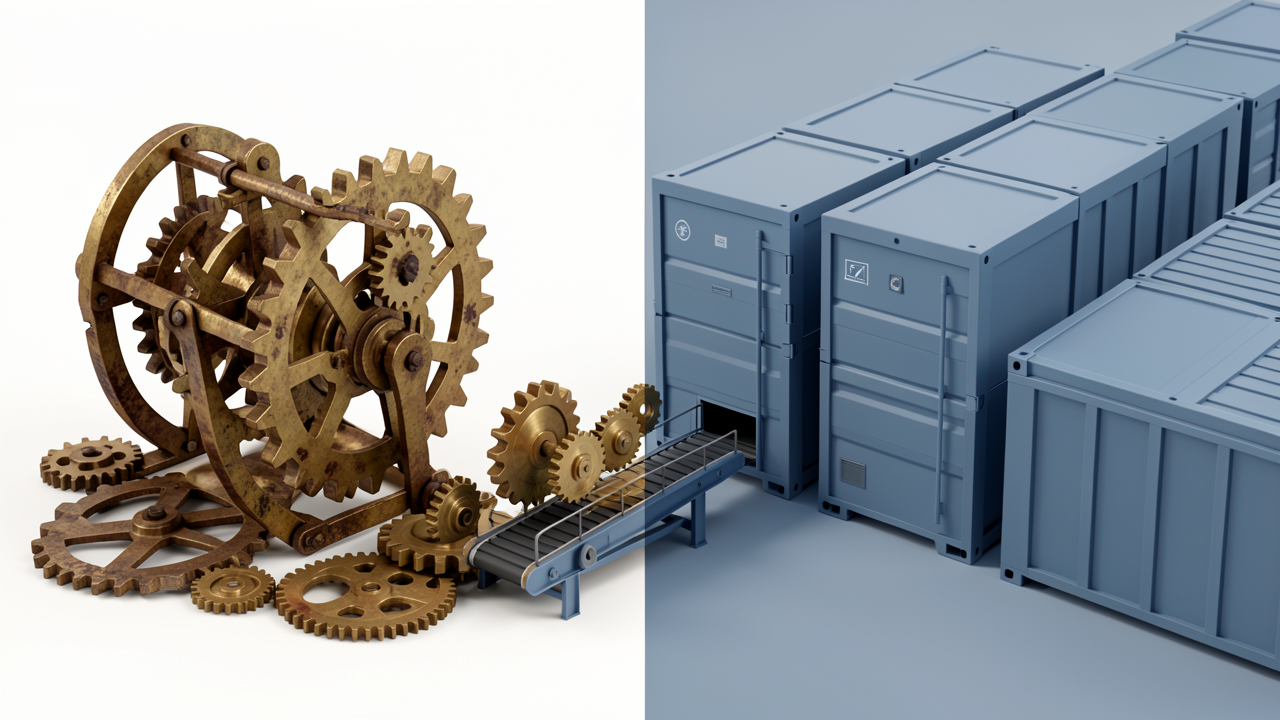
Stage 1 – Classic Activiti
The original Activiti engine is a lightweight, pure‑Java BPMN 2.0 execution core that can be embedded directly in any Java application. It ships with rich Java APIs, native Spring and Spring Boot integration, and a web‑based Tasklist UI plus a REST endpoint for task management. The engine coordinates human approvals, data‑synchronisation steps, and other long‑running activities while remaining fully open source under the Apache 2.0 license Source 1.
Stage 2 – Activiti Cloud
Activiti Cloud re‑architects the platform as a set of cloud‑native building blocks designed for distributed, container‑orchestrated environments. Core components include:
These building blocks are intended to be orchestrated on Kubernetes or similar platforms, allowing horizontal scaling and independent versioning Source 2.
While the classic engine can be dropped into a monolith, Activiti Cloud requires assembling, configuring, and maintaining multiple containerised services. Teams moving from Activiti 1 to Activiti Cloud must treat the target as a platform rather than a single embedded engine, and existing Java‑centric codebases will need refactoring to interact with the new microservice APIs.
Activiti Cloud is a good fit for teams that have already standardised on containerised, distributed deployments and are prepared to own the lifecycle of the individual services. If a project prefers a single‑process, embed‑ready engine with minimal operational footprint, the classic Activiti release remains the more pragmatic choice.
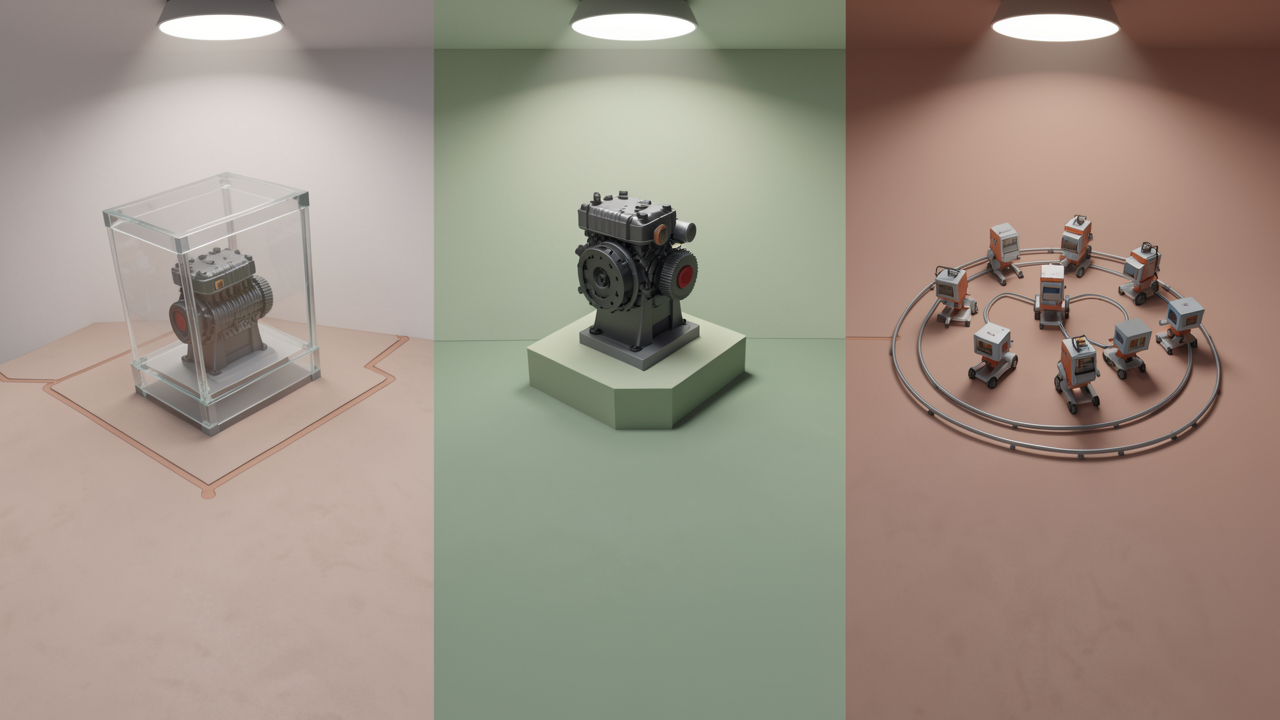
| Criterion | Flowable | Camunda Cloud (Zeebe) | Activiti Cloud |
|---|---|---|---|
| On‑premises | Supported in all four modes – embedded, standalone service, clustered, or private cloud – with a first‑class Spring integration that lets a Java application ship the engine inside its own deployment. | Not offered; the open‑source Zeebe can be self‑hosted, but the commercial Camunda Cloud service itself is a hosted offering, so on‑premises use requires running a self‑managed Zeebe cluster instead of the cloud service. | Supported via containerized Runtime Bundles and Query Services that can be deployed on a private Kubernetes cluster, giving a pure on‑premises path. |
| Public cloud | “Cloud” mode can be run on any IaaS (AWS, Azure, GCP) or on Flowable’s managed SaaS; the engine is still a service you own, so you control scaling and upgrades. | Service‑first model: the workflow engine runs only in Camunda’s managed cloud, accessed through language clients (Java, Go, Node, etc.) – no local engine to install. | Designed for cloud‑native environments; the micro‑service building blocks (Runtime, Task, Query, etc.) are deployed as Kubernetes workloads, fitting any public cloud that runs K8s. |
| Hybrid / Air‑gap | All four modes can be combined – e.g., an embedded engine for low‑latency on‑premises work‑flows, while a clustered deployment lives in a DMZ – but you must provision and operate the infrastructure yourself. | Hybrid is possible only by running a self‑managed Zeebe cluster alongside the hosted service; the hosted Cloud itself cannot be placed in an air‑gapped environment. | Because each component is containerised, you can run a full Activiti Cloud stack in an air‑gapped Kubernetes cluster, though you lose access to the optional managed SaaS extensions. |
| Operational overhead | • Embedded: zero separate platform – process state lives in the same JVM as the app, but upgrades tie to application releases.<br>• Service / Cluster / Cloud: requires provisioning a database, configuring REST endpoints, handling clustering, and maintaining the engine lifecycle. Spring Boot starters reduce boilerplate, but you still own the runtime. | No engine to install or patch – Camunda Cloud handles scaling, upgrades, and HA. The trade‑off is managing client libraries, network connectivity, and any external task workers you provide. | You must deploy and orchestrate several micro‑services (Runtime Bundle, Query Service, etc.) and a supporting PostgreSQL / Elasticsearch stack. This gives fine‑grained scalability but adds Kubernetes expertise and ongoing monitoring of multiple pods. |
Embedded vs. service‑first – An embedded Flowable engine couples process state to the host application’s lifecycle. This is advantageous when versioning of business logic and process definitions is tightly aligned, but it raises the risk that a change to the application forces a process migration. Service‑first (Camunda Cloud) or component‑based (Activiti Cloud) deployments isolate the BPM runtime, allowing independent upgrade cadences at the cost of operating a separate platform.
Scalability expectations – Camunda Cloud’s Zeebe engine is built for horizontal scalability out of the box; the service automatically shards workflows across brokers. Activiti Cloud achieves similar scale by letting you increase the replica count of each micro‑service. Flowable’s clustered mode provides distributed execution but requires manual configuration of the cluster leader, database, and messaging layer.
Compliance & isolation – When regulatory or security constraints demand air‑gapped or sovereign environments, Flowable’s embedded mode can run on an isolated VM, while Activiti Cloud’s containerized stack can be placed in a locked‑down Kubernetes cluster. Camunda Cloud cannot satisfy strict isolation because the execution environment is always the vendor‑hosted service.
Operational expertise – Choosing Flowable for an embedded or simple service deployment needs only Java/Spring knowledge. Selecting Camunda Cloud reduces ops effort but adds a dependence on the vendor’s SLA and API stability. Activiti Cloud assumes a team that can manage Kubernetes, Helm charts, and the associated observability stack.
Note: The matrix above syntheses generic deployment criteria with the specific offerings of Flowable, Camunda Cloud, and Activiti Cloud. It is not a vendor‑published comparison; product capabilities evolve, so verify each claim against the current version before committing.

| Capability | Flowable | Camunda | Activiti |
|---|---|---|---|
| Human‑task handling | Provides a Task service reachable via Java and REST APIs. The UI for human work is the Task UI bundled with the Flowable Case Platform, which can be extended or replaced. | Offers the Tasklist web application and a dedicated REST endpoint. Human tasks are modelled in BPMN and can be routed to the Operate and Tasklist tools for monitoring and assignment. | Supplies a Tasklist UI and a REST API for task queries and completion. The UI is lightweight and integrates with Spring‑Boot applications. |
| Decision automation (DMN) | Includes a native DMN engine; decision tables can be invoked from BPMN processes or called directly via REST/Java. | Supports DMN modelling and execution through the Zeebe‑based engine; decisions are typically called as service tasks or via the Decision API. | Provides DMN evaluation through the core engine API; decision tables are used in BPMN scripts or as service tasks, but the feature set is less emphasized than in Flowable or Camunda. |
| Case / unstructured work (CMMN) | Full CMMN engine plus a low‑code Case Platform that lets business users design case models without code. This is the only engine among the three that advertises a dedicated CMMN engine in its open‑source distribution【{"url":"https://www.flowable.com/open-source","content":"Flowable supports three open standards… CMMN…"}】. | No native CMMN support; case‑like behaviour is achieved by modelling flexible BPMN sub‑processes or using external services. | Activiti Cloud re‑architects the original engine into cloud‑native micro‑services but does not expose a separate CMMN engine; case handling must be modelled in BPMN. |
| API surface | Rich Java SDK and REST API for all three engines (BPMN, DMN, CMMN)【{"url":"https://www.flowable.com/open-source","content":"Flowable provides rich Java and REST APIs"}】. | Java client libraries and language‑agnostic Zeebe clients (gRPC, HTTP) plus REST endpoints for task and decision services【{"url":"https://medium.com/@techlatest.net/top-15-open-source-workflow-automation-tools-e2822e65c842","content":"Human task management … Zeebe engine"}】. | Java‑centric APIs with Spring Boot autoconfiguration; REST API covers process start, task query, and completion【{"url":"https://www.activepieces.com/blog/top-10-open-source-workflow-automation-tools-in-2024","content":"Task management through Tasklist UI or REST API"}】. |
Unstructured, knowledge‑worker‑driven cases – If the majority of work relies on ad‑hoc, dynamic case handling, Flowable is the only engine that documents a native CMMN engine and a low‑code case designer. This makes it the natural fit for insurance claims, investigations, or customer‑service tickets where the path cannot be fully predefined.
Decision‑heavy processes – Both Flowable and Camunda provide a mature DMN engine. Choose Flowable when you need tight integration with CMMN or a single‑stack Java/REST API surface. Choose Camunda if you are already adopting the Zeebe‑based cloud‑native stack and require high‑throughput, event‑driven decision execution.
Human‑in‑the‑loop workflows with a classic BPMN view – All three platforms support human tasks, but the UI and tooling differ. Camunda’s Tasklist and Operate offer polished monitoring for large‑scale deployments, while Activiti’s lightweight Tasklist may be sufficient for smaller, Spring‑Boot‑centric applications. Flowable adds the advantage of low‑code task design for business users.
By grounding the selection in the fundamental nature of the workload rather than a long checklist of individual features, architects can arrive at a concise, defensible shortlist of BPM engines.

All three engines use permissive Apache 2.0–compatible licences, which means they can be used, modified, and redistributed commercially with minimal legal friction.
Because the licence model is effectively the same, the decision should not hinge on legal terms but on the operational and support guarantees that accompany each distribution.
| Engine | Community activity (snapshot) | Formal support model | Notable risk factors |
|---|---|---|---|
| Flowable | >5 000 GitHub stars and an active contributor base, as reported by the project page【0†content】 | Optional commercial contracts from the core vendor; community forums and Slack are lively | Requires the application team to own upgrades and incident handling when embedded. |
| Activiti | No explicit star count, but the ecosystem has fragmented through multiple forks. The “Pros/Cons” list in a 2024 comparative blog notes no guaranteed enterprise‑level support and history of forks leading to community fragmentation【2†content】 | Primarily community‑driven; no dedicated commercial SLA unless bought from third‑party integrators. | Hidden infrastructure and maintenance costs can appear when self‑hosting the cloud‑native components. |
| Camunda | Zeebe’s GitHub activity is strong, and Camunda pairs it with a commercial cloud service that supplies managed hosting, monitoring, and tooling【3†content】 | Paid SaaS subscription (Camunda Cloud) plus optional on‑premise Enterprise Edition with SLAs. | Operational overhead shifts to a platform team that must govern the managed service and its version upgrades. |
Since licensing does not differentiate Flowable, Activiti, or Camunda, architects should prioritize support guarantees and the expected long‑term operational workload. A permissive licence gives freedom, but the real ownership risk lies in who will manage upgrades, SLA compliance, and hidden infrastructure costs. Star counts and support statements reflect the state of the ecosystem at the time of writing and may evolve; they should be treated as indicative evidence rather than future‑proof guarantees.

Recommendation – Use the following decision roadmap to narrow the engine choice.
Embedded‑first, later‑standalone migration
Horizontal scaling across services & languages
Container‑native microservice estate
Consider non‑BPMN alternatives
Final step: Verify every claim against the latest engine documentation. Engine names, component structures, and supported BPMN/DMN/Cloud standards evolve between major releases; a solution intended to run for a decade must be validated against the current version rather than marketing snapshots.